
This article was written in collaboration with LANDR, a company that Ari’s Take is proud to be partnering with.
The use of AI in music production has grown massively in recent years, and it shows no signs of slowing down. But this has also changed the game when it comes to music distribution and streaming.
Depending on the AI tools you use and how you use them, tracks can be taken down and you can potentially be banned from platforms. So it’s more important than ever for artists using AI to understand how this works. If you use AI in your music or plan to, this guide will help you ensure your releases don’t violate the law or platform rules.
First, let’s get a handle on the basics.
Understanding AI in music production
“Artificial intelligence” in music usually refers to tools that speed up production using machine learning, generative models, or neural networks to make predictions and automate creative processes.
Some interfaces even mimic human-like interaction, such as chat-based tools like ChatGPT. This kind of technology can appear in many forms. Let’s take a look at the main categories of AI music tools today.
AI audio generators
These create full tracks or stems from written prompts or musical input. They can produce vocals, instruments, or soundscapes to give you ideas or help you sketch out songs. Examples of this include Gennie, Aiode, Suno and Udio.
AI MIDI generators
These generate musical patterns, chord progressions, and melodies as MIDI data for editing or arranging in a DAW. Examples of this include LANDR Composer and MIDIGEN.
AI stem splitters
These isolate vocals, drums, bass, or instruments from mixed audio files, making them useful for remixes, practice sessions, or analyzing your favorite songs to understand how they’re put together. Examples of this include LANDR Stems and Fadr Stems.
Other generative AI tools
AI can also handle mastering, lyric generation, effects, and sample recommendations. Examples of this include LANDR Mastering, Algonaut Atlas, and the AI preset generator for Vital.
Keep in mind that some tools automate tasks or randomize results without technically using AI. If you’re not sure whether a tool is in fact AI-powered, check the developer’s website or ask them directly.
The impact of AI on music distribution and streaming
AI tools have inspired countless musicians, but they can also be misused, leading to violations of copyright law or platform policies. Common problem areas include artist impersonation, copyright violation, and spam releases. Let’s look at some of these issues in detail.
Artist impersonation
Some tools generate vocals that replicate famous voices. Using these to release songs as if they’re performed by those artists can get you banned. The viral “Heart on My Sleeve” track, which was created with AI-generated vocals in the style of Drake and The Weeknd, was removed from all major platforms. In a nutshell: impersonating artists with AI is strictly prohibited.
Copyright violation
AI stem splitters make remixing easy, but if you release music using extracted material from copyrighted songs, it’s treated as copyright infringement. You risk having your music taken down or facing legal action. Use stem splitters privately for practice, learning, and song analysis, not for public releases.
Spam releases
Full-song generators allow users to create massive quantities of AI music, and of course, this has led to issues with spam releasing. Uploading AI-generated music in bulk can therefore trigger platform spam filters. Streaming services like Spotify now detect and de-prioritize this kind of content. Even if it’s not banned outright, AI-generated spam releases won’t be promoted by algorithms.
Bulk AI releases also raise ethical issues, diverting attention and revenue from human-made music. In the interest of promoting transparency and stricter quality control, some platforms like Deezer and YouTube now label AI-generated songs.
Making sense of platform policies
Different AI tools have different implications for originality, ownership, and quality. Whether you can distribute music that uses AI depends on the tools, how you use them, and the policies of each platform.
Because AI is evolving fast, policies differ across DSPs (Spotify, Apple Music, TikTok, etc.) and distributors (LANDR, TuneCore, DistroKid, etc.), and they can change quickly. Some are also intentionally broad to accommodate future developments.
That said, most platforms are primarily concerned with artist impersonation, copyright violations, and spam or bulk AI uploads. This means that using AI doesn’t necessarily mean your track will be rejected.
So, safe uses of AI in music might include:
- Generating original sounds or MIDI and integrating them with your own material
- Processing your original sounds with AI-powered effects
- Finalizing your music with an AI mastering engine
However, monetization sources like YouTube Content ID, TikTok, or Meta (Facebook and Instagram) require strict originality. Your distributor may restrict AI-generated music for these channels to comply with platform rules.
The relationship between distributor and DSP
It’s important to remember that distributors must align with the varying policies of multiple DSPs while maintaining their own standards. Even if one platform allows more AI content, a distributor may follow the strictest common denominator to avoid conflict.
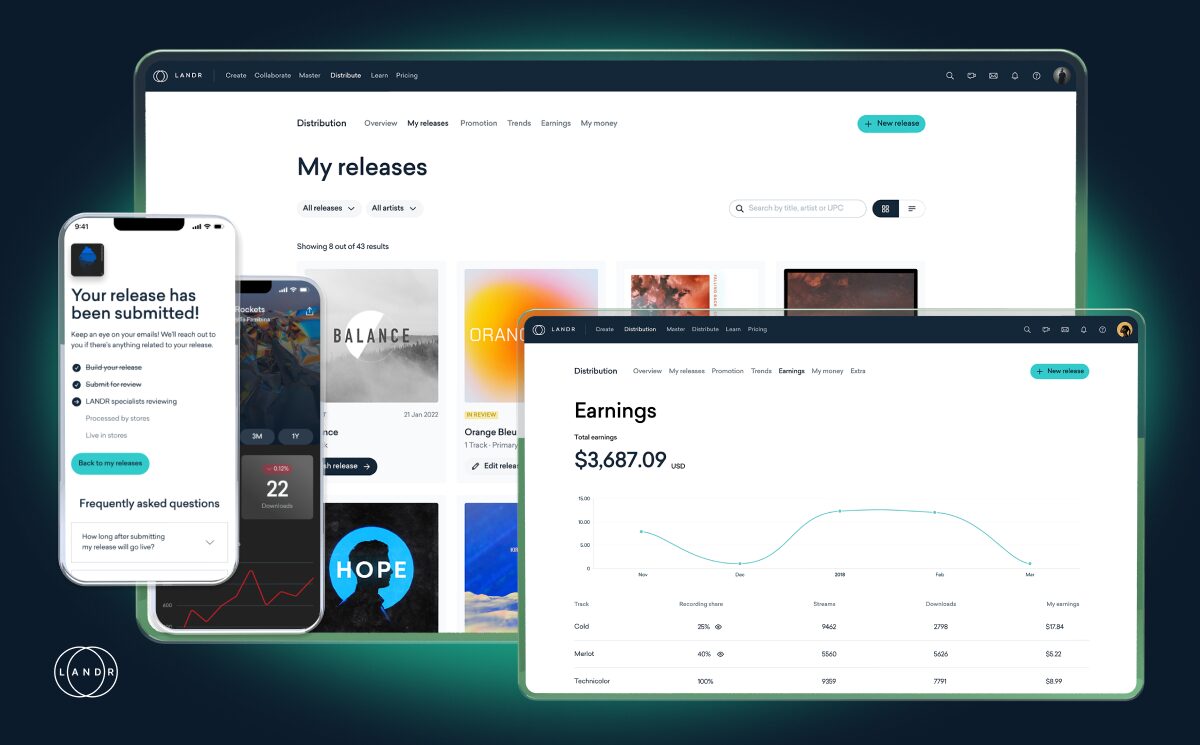
For example, LANDR Distribution permits AI-assisted music but emphasizes human creativity and quality, as outlined in their policy. They may set limits on the amount of fully AI-generated material artists can release to prevent spam and uphold fairness.
With all of these policy-related details out of the way, what are some actionable best practices for using AI in your music without running into problems with DSPs or your distributor?
Tips for safely using AI in your music
1. Keep track of the tools you use and how you use them
Distributors may ask what AI tools you used when reviewing your release. Keep brief notes on which AI features were involved, including lyrics, stems, mastering, and more. A simple record helps clarify questions later and gives you insight into your creative process.
2. Be aware of copyright and ownership
AI tools that isolate stems or mimic artist voices can raise legal and ethical questions, especially when working with copyrighted material or recognizable vocal styles. Make sure you have the rights to use the sound sources you use in your music. Going forward without proper clearance could lead to takedowns or disputes.
3. Know the policies of distributors and music platforms
Rules regarding AI music tools will vary based on each distributor and DSP. Some will limit AI-generated uploads or require that you disclose when your music is AI-generated. And, of course, violating originality or impersonation rules can result in takedowns or bans. Always know the terms of service before releasing.
4. Don’t forget policies on AI image generators
If your artwork was created using AI tools like Midjourney or DALL·E, check both the platform’s license and your distributor’s artwork guidelines. Some platforms prohibit AI-generated art without proper labeling, while others ban it altogether. Use only licensed sources or combine AI with manual edits to stay compliant.
5. Balance your use of AI with your originality and creativity
While it can be a powerful collaborator, AI shouldn’t fully replace your unique voice and style. Use it to enhance your music, not to automate it entirely. Both fans and platforms respond well to originality. Keeping a human touch helps your work stand out and shows that you’re not a prompt engineer but a dedicated and inspired musician.
6. Stay informed as everything evolves
AI policies in music are still in flux, and new regulations, court cases, and guidelines are appearing all the time. What’s allowed today may not be tomorrow. Follow updates from music rights organizations, AI platforms, and your distributor. Staying informed helps you adapt quickly and keep your releases risk-free.
AI and music: Looking to the future
There’s certainly no denying that AI-powered tools have made an enormous impact on how music is made, released, and discovered. In some cases this is for the better, while in other cases things can get a bit complicated.
It’s nevertheless clear that AI music technology is here to stay. Both platforms and artists have the power to create a world where technology supports human creativity rather than replacing it, while helping to enrich music culture without compromising it. This is why building a balanced and empowering outlook on AI music tools is such a deeply held priority for platforms like LANDR Distribution.
As always, stay updated on the policies of DSPs and your distributor, and always follow best practices when making AI-powered tools a part of your musical process.