










Whew, I got quite the backlash for my post about normalizing giving points to session musicians.
Seems like an innocent enough thought experiment. My fatal flaw was using Taylor Swift as an example of the wealth disparity in the music industry. The algorithm fed it to Swifties and they had a lot to say about it. The vast majority of them are not in the music industry, but are social media warriors that perform for one another for who can bring the best retort to a “hater.” Which, I suppose could be a reflection of society as it stands today. On all accounts. More on this in a moment.
Swift is the most successful musician in the entire world. Who just had the most successful tour of all time – breaking every record. And is a billionaire.
She’s also extremely generous with her performers and crew and seems to treat them very well – handing out nearly $200 million in bonuses on top of their salaries, from the $2 billion that the tour grossed.
Ok, now that that’s out of the way, let’s discuss the music business. Please don’t @ me anymore, Swifties. <3
So, just a couple months ago, I posted “Don’t Cut Your Drummer Into Publishing” which similarly caused a big ol stir on the socials. Most of the backlash was just plain ignorance. It seems most musicians in the music business don’t actually understand how the business of music works. Believe it or not, it doesn’t all function on just good vibes. As much as we’d all love for it to be the case.
+Don’t Cut Your Drummer Into Publishing
Now, you must be wondering, aren’t I being hypocritical saying both “don’t cut your drummer into publishing” and also “It’s time to normalize cutting session musicians into the master sound recording”?
As much as I’d love to give you a ‘gotcha’ award. It’s a bit more nuanced and complicated than this.
The simplest version is, there are two copyrights to every recording: 1) The sound recording (some call this the master) and 2) The composition (some call this the song, or musical work).
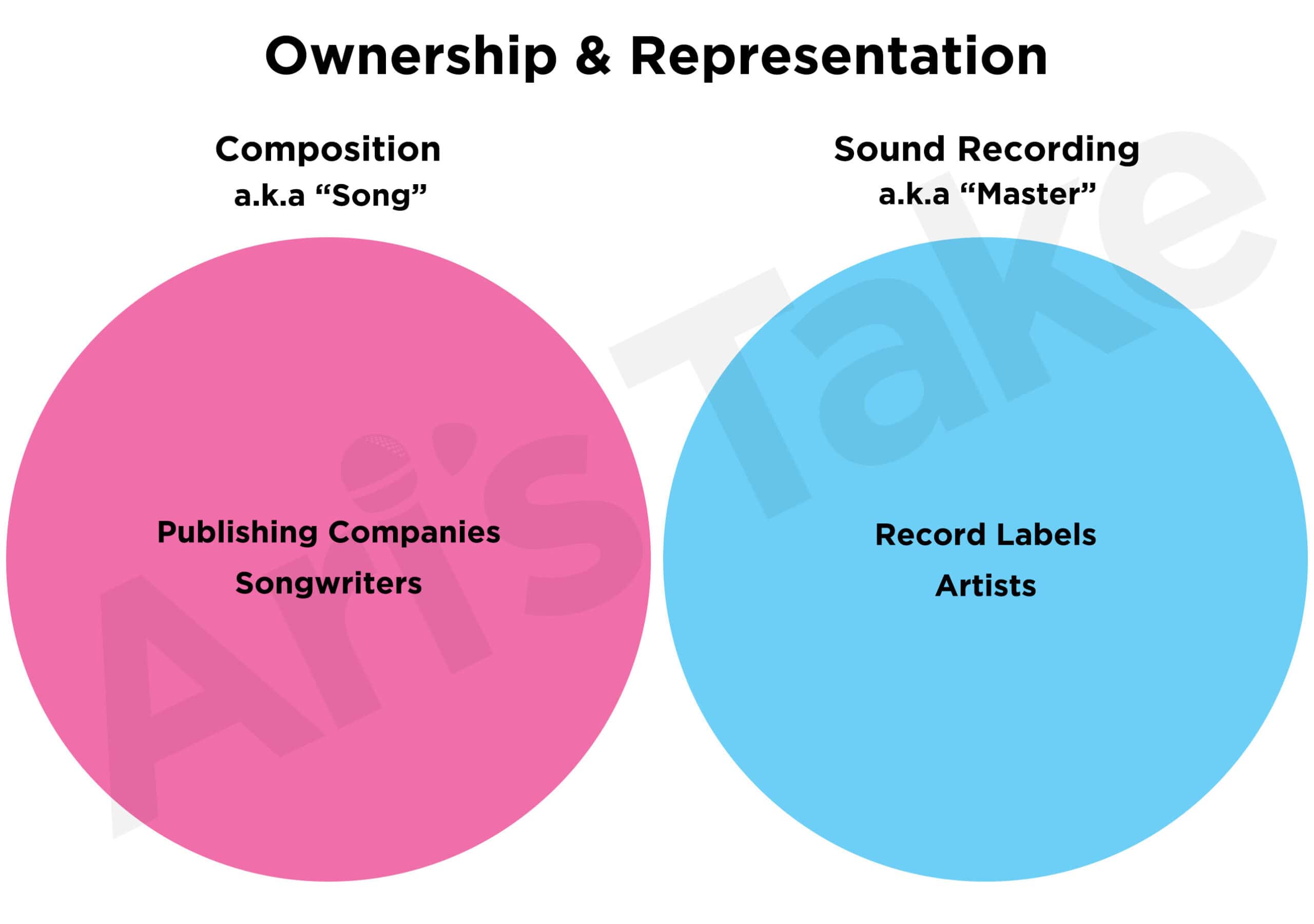
When so many indie artists do everything themselves, it can be hard to understand this breakdown. And similarly, when so many artists work with beat-maker producers, or simply buy beats off the internet, it gets even more confusing.
+How Do Producer and Songwriter Splits Work
I’m gonna attempt to break this down as musician-y as possible.
Before I get into this, I want to be super clear, all of this is regarding individual Artists (not bands) hiring session musicians. Also known as hired guns, sidemen, whatever you want to call them. If you are in a band, you work out whatever deal makes sense for band harmony. Want to split everything equally no matter who did what? Great! Coldplay does that. Only think that whoever wrote the song should get ‘publishing’ and the band can split up the master royalties? Fine! The 1975 does this. Do what makes sense for your band.
Onward!
There are a bunch of places where music generates royalties. We mostly think about streaming. But royalties also come from radio, TV, live music venues, bars, etc. Of course the vast majority come from streaming, so that’s what most of us focus on.
When it comes to streaming, the DSPs (fancy term for streaming services like Spotify and Apple Music), pay about 80% of the royalties to the master rights holders (usually the record label or distributor and then the Artist) and about 20% goes to the publishing rights holders (the publishing company and then the songwriters).
This is why you need to know what royalties you’re entitled to.
Historically, only those who had a hand in writing the composition (words and music) got publishing. And only those who were responsible for making the recording got master royalties.
And historically, only producers would get “points on the master” (which just means a percentage of master royalties) along with artists. But that was usually it.
Non-Artist songwriters (like the gazillion names you see on pop songs who you’ve never heard of) only really make real money when they write a hit that gets on the radio. The tiny bit they get from streaming, then split amongst all the other songwriters, after their publisher’s cut, doesn’t add up to much. And the money for songwriters is really made in performance royalties generated from big radio hits. In the sales era, songwriters would get an equal cut of every album (based on how many songs they wrote on the album) sold no matter if the song they wrote was a hit or not. But in this fragmented streaming era, it’s increasingly becoming harder to become a songwriter.
And professional songwriters are only interested in writing hit songs because of it.
+Hit Songwriter/Producer on Publishing Deals and Artists Taking Credit for Songs They Didn’t Write
Session musicians have historically only been paid a fee for the recording session and that’s hit.
In countries outside the US, these session musicians are entitled to neighboring rights royalties. But in the states, this is limited to digital radio (like SiriusXM, Pandora, iHeart, etc). And only for the top 25,000 most successful tracks a year.
This is actually a little known fact. If you played on a track that is getting some digital radio spin (like on SiriusXM), you are entitled to 5% of all digital radio royalties (split amongst all the non-featured musicians on the track). If you’re wondering if there are royalties out there for you, visit The Fund and search your name, or get in touch with them directly and ask!
But so few recordings actually make it to radio or get any significant radio play. 100,000 recordings get uploaded to DSPs per day. The Fund only tracks the top 25,000 recordings a year at radio.
Historically, major labels would keep 82% of master royalties, and the remaining 18% would go to the artist (with sometimes a few % going to the producer).
Now, many record label deals are 50/50. But the vast majority of recordings are not released through a major label of course.
I think it’s time to cut in those that helped make your recording great. It’s not hard to do. Most distributors enable payment splitting. You just designate what percentage you want to pay out and the distributor will pay it directly.
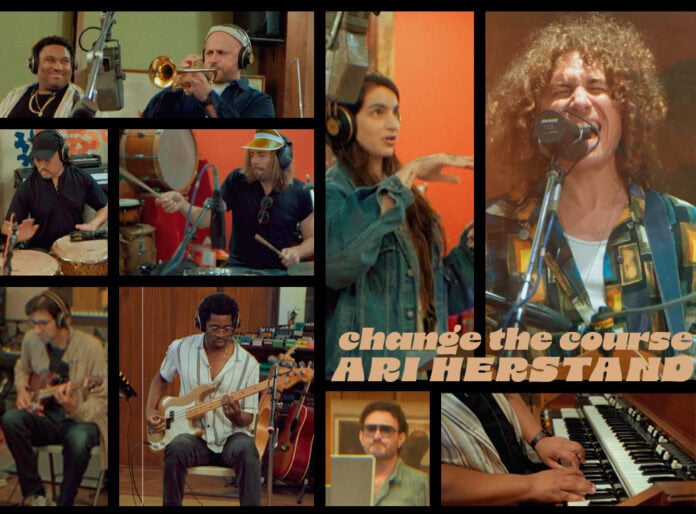
What I’ve started to do is pay my session musicians a standard fee for the session and give them one point on the master. Which just means, 1% for each musician – after I recoup the costs of the session
If you have a ton of musicians, you could split 5% amongst all of them like The Fund does. Or do the 1 point per musician like I do. I also typically cut my producer in as well. Anywhere from 15-50% is standard usually in relation to the up front fee.
This is all after I recoup the costs of the session. Meaning, if I paid $2,500 for the session (studio, musician fees, producer fees, mixing, mastering, etc), then I make that money back first, then pay out points to the musicians and producers.
There’s no reason that Artists (and labels) should reap the rewards of a successful track and the session musicians (and producer) shouldn’t.
We can’t fix the wealth disparity in the world overnight, but we can maybe make the music industry a bit more equitable with these small actions.